If you’re unhappy with your home’s water quality, installing a water treatment system can make a noticeable difference. But before choosing a system, there’s an important question to answer: Do you need a water softener or a water filter?
Although the terms are sometimes used interchangeably, water softeners and water filters perform very different jobs. A water softener is designed primarily to address hard water minerals such as calcium and magnesium. A water filter is designed to reduce specific substances or impurities in the water, depending on the type of filtration system.
When comparing a water softener vs. water filter, the better solution therefore depends on what’s actually in your water and what problems you want to solve. Some homes may even benefit from both.
Here’s how the two types of water treatment differ and how to determine which one makes sense for your home.
What Is a Water Softener?
A water softener treats hard water, which contains elevated levels of dissolved minerals—primarily calcium and magnesium.
While these minerals aren’t necessarily a reason to consider water unsafe to drink, they can create frustrating problems throughout your home.
Hard water may contribute to:
- White, chalky scale on faucets and fixtures
- Spots on glasses and dishes
- Mineral buildup on shower doors
- Soap and shampoo that don’t lather as well
- Stiff or dingy laundry
- Scale accumulation inside water-using appliances
- Mineral deposits within plumbing and fixtures
A traditional water softener typically uses a process called ion exchange. As hard water passes through the softener’s resin, calcium and magnesium ions are exchanged for sodium or potassium ions. The result is softened water that is much less likely to create hard water scale.
For households struggling with hard water problems, a residential water softener targets the source of the problem rather than simply filtering the water.
What Is a Water Filter?
A water filter has a different purpose.
Rather than removing hardness minerals through ion exchange, water filtration systems are designed to reduce particular substances in water. Exactly what gets reduced depends on the filtration technology and media being used.
For example, a filtration system may be selected to address concerns involving chlorine, unpleasant tastes or odors, sediment, or other substances identified in the home’s water.
Some filters treat water at one location, such as a kitchen sink. Others are installed where water enters the home.
A whole-house water filtration system, for example, treats water before it is distributed to faucets, showers and water-using appliances throughout the house.
The important point is that not all filters remove the same things. A homeowner should choose a filtration system based on the actual characteristics of the water rather than simply looking for a product labeled “water filter.”
Water Softener vs. Water Filter: The Main Differences
The easiest way to understand the difference between a water softener and water filter is to look at the problem each is designed to solve.
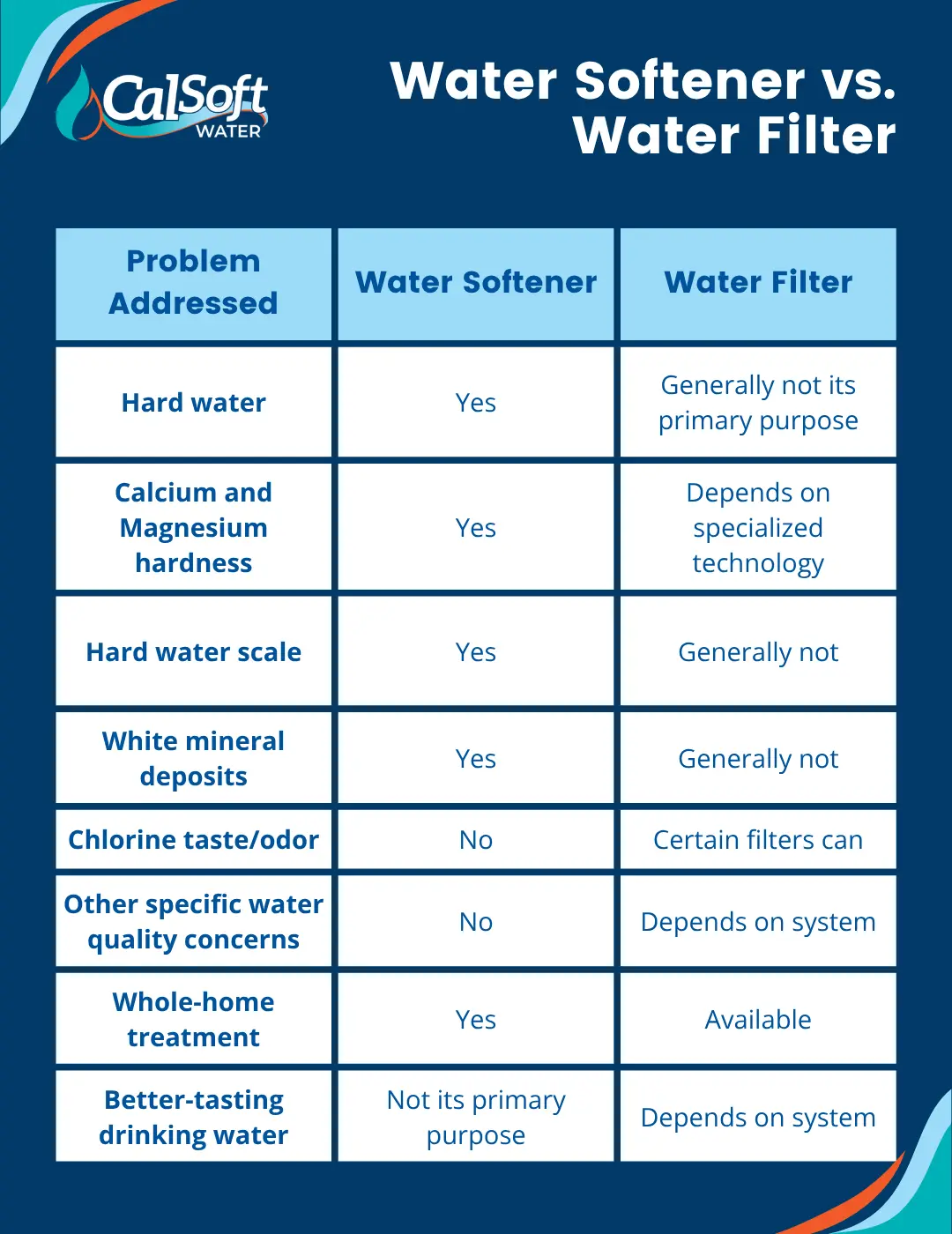
In other words, softening and filtration aren’t competing ways of accomplishing exactly the same thing. They are different forms of water treatment.
That distinction is important when choosing a system.
Does a Water Filter Soften Hard Water?
Most conventional water filters do not soften water.
A filter may improve certain characteristics of the water while leaving calcium and magnesium—the minerals responsible for hardness—largely unchanged.
That means a home could have filtered water and still experience scale on faucets, spots on dishes and mineral deposits on shower doors.
If water hardness is the underlying problem, a water softener is typically the appropriate technology.
Does a Water Softener Filter Water?
A traditional water softener should not be considered a substitute for a water filtration system.
Its primary purpose is to remove hardness-causing calcium and magnesium through ion exchange. It isn’t designed to address every potential substance that homeowners may want reduced in their water.
This is why identifying your specific water concerns is so important.
If you’re primarily concerned about scale, mineral buildup and other hard water problems, look toward water softening.
If you’re concerned about characteristics such as chlorine, sediment, taste, odor or other water quality issues, investigate water filtration.
And if you have concerns from both categories, you may want both.
Do I Need a Water Softener AND a Water Filter?
Possibly.
This is one of the biggest misconceptions in the water softener vs. water filter discussion. Choosing one doesn’t necessarily mean that you don’t need the other.
Imagine that your home’s water contains enough calcium and magnesium to cause significant hard water scale, but you also dislike its chlorine taste or odor.
A water softener could address the hardness, while an appropriately selected filtration system could address the separate filtration concern.
Used together, the systems can address different aspects of your home’s water quality.
This is also why there isn’t one universal “best” water treatment system. The right solution depends on both what is in your water and what you want to change about it.
What About Reverse Osmosis?
Reverse osmosis adds another option to the conversation.
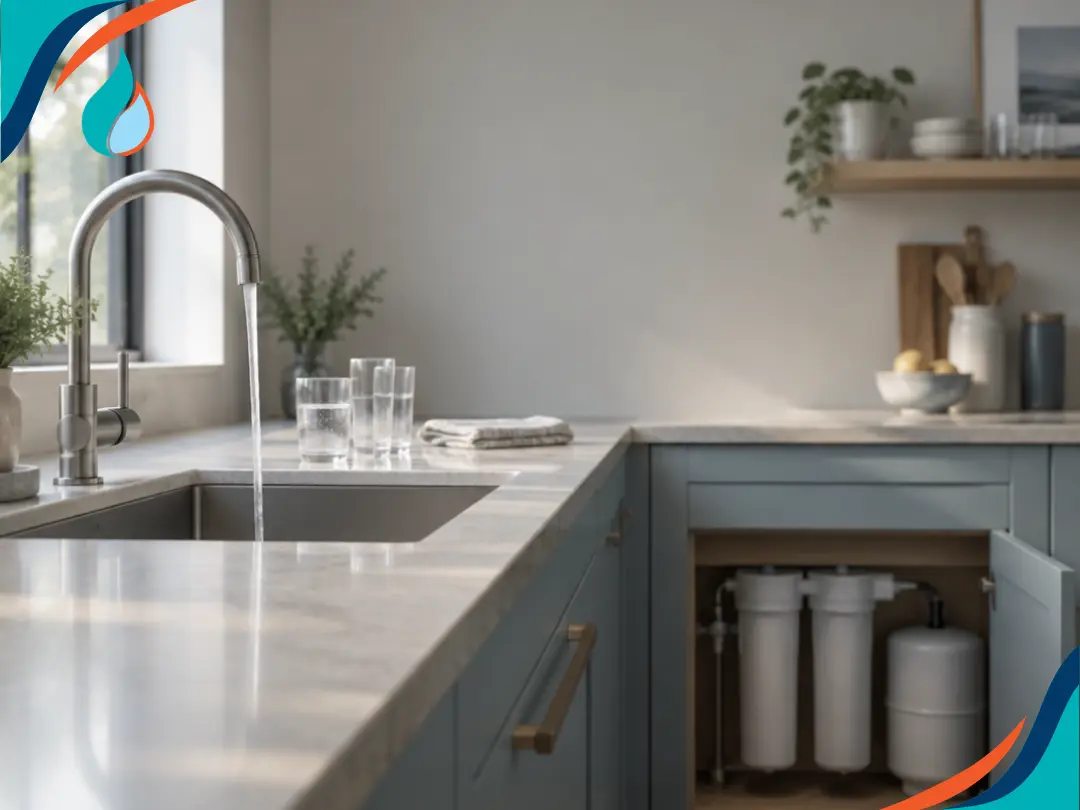
A whole-house filter treats water throughout the home, while a reverse osmosis drinking water system is commonly used to provide highly treated water for drinking and cooking.
This can create several possible treatment configurations.
For example, one household might only need a water softener. Another might choose whole-house filtration.
Another may benefit from a softener for the entire home plus reverse osmosis at the kitchen sink. Still another may benefit from softening, whole-house filtration and RO because each system addresses a different need.
The goal isn’t to install the greatest number of systems. It’s to determine which treatment technologies address your particular water.
How Do You Know Whether You Have Hard Water?
Some common signs of hard water include:
- White scale around faucets
- Cloudy or spotted glasses
- Mineral deposits on shower doors
- Soap that doesn’t lather easily
- Recurring scale on fixtures
- Hard water buildup in water-using appliances
However, appearances alone can’t tell you everything about your water.
Testing the water can help determine its hardness and identify other characteristics that should be considered before choosing treatment equipment.
That’s particularly important because two homes can have very different water treatment needs even if they’re located relatively close to one another.
Which Is Better: A Water Softener or Water Filter?
Neither is inherently better because water softeners and water filters solve different problems.
Ask yourself what you want to accomplish.
If your primary problem is hard water:
A water softener is generally the more appropriate solution.
If your primary concerns involve chlorine, sediment, taste, odor or another filterable substance:
An appropriate water filtration system may make more sense.
If you have both types of problems:
A combination of softening and filtration may provide the most comprehensive solution.
If your biggest concern is drinking and cooking water:
A reverse osmosis drinking water system may also be worth considering.
The key is matching the technology to the problem rather than purchasing a system based on its name or marketing claims.
Frequently Asked Questions About Water Softeners vs. Water Filters
Can a whole-house water filter replace a water softener?
Not necessarily. If your home has hard water, most conventional whole-house filters won’t provide the same hardness reduction as an ion-exchange water softener. Filtration and softening serve different purposes.
Can you have a water filter and water softener at the same time?
Yes. Some households use both because they have multiple water quality concerns. One system can address hardness while the other addresses specific filtration needs.
Does a water softener remove chlorine?
A conventional ion-exchange water softener isn’t designed primarily for chlorine reduction. A filtration system containing appropriate treatment media may be used when chlorine reduction is desired.
Does a water filter remove calcium?
It depends on the technology, but conventional filtration shouldn’t automatically be assumed to remove hardness-causing calcium and magnesium. If hard water is the concern, a water softener is designed specifically for that purpose.
Should I filter or soften my water first?
The appropriate system configuration depends on your water quality, treatment equipment and goals. Rather than relying on a universal order, have your water evaluated and choose a treatment setup designed for your home’s conditions.
Find the Right Water Treatment Solution for Your Central Coast Home
When it comes to water softener vs. water filter, the most important question isn’t which system is better. It’s which system solves the water problems you actually have.
CalSoft Water has served California’s Central Coast for decades, helping homeowners find practical solutions for local water conditions. We offer traditional water softeners, portable exchange tank service, whole-house water filtration and reverse osmosis drinking water systems, giving us multiple ways to address different water quality concerns.
Instead of guessing which system you need, start by finding out what’s going on with your water.
Contact us today to discuss your water concerns and learn which water treatment solution makes the most sense for your home.