Living on California’s Central Coast comes with unmatched natural beauty—from the rugged cliffs of Avila Beach to the rolling vineyards of Paso Robles and the rich agricultural heartlands of Santa Maria and Nipomo. As residents here, preserving our coastlines, marine life, and local ecosystems is a top priority.
Yet, many eco-conscious homeowners face a daily dilemma: How to get clean, great-tasting drinking water at home without relying on single-use plastic bottles.
Understanding the environmental benefits of RO (reverse osmosis) systems reveals why moving away from bottled water to point-of-use filtration is one of the most effective sustainability moves a Central Coast household can make.
The Plastic Bottled Water Problem on the Central Coast
It’s easy to view bottled water as a simple convenience, but its ecological footprint is massive. When you evaluate the life cycle of single-use plastic bottles, the numbers are staggering:
- Petroleum Consumption: Manufacturing single-use plastic bottles requires millions of barrels of oil annually.
- Carbon Footprint of Transport: Freight trucks hauling heavy cases of water across California highways burn thousands of gallons of diesel fuel, generating significant greenhouse gas emissions.
- Low Recycling Rates: Despite green efforts across San Luis Obispo and Santa Barbara counties, a significant percentage of single-use plastic ends up in landfills, local waterways, or the Pacific Ocean, where it breaks down into toxic microplastics.
By ditching bottled water cases, a family of four could easily prevent over 1,400 plastic bottles from entering the waste stream every single year.
Weighing the Environmental Benefits of RO Systems
When evaluating the environmental benefits of RO filtration, homeowners often ask: Is an in-home RO system truly eco-friendly?
To answer that objectively, we have to examine both sides of the equation.
1. Eliminating Plastic and Transport Emissions
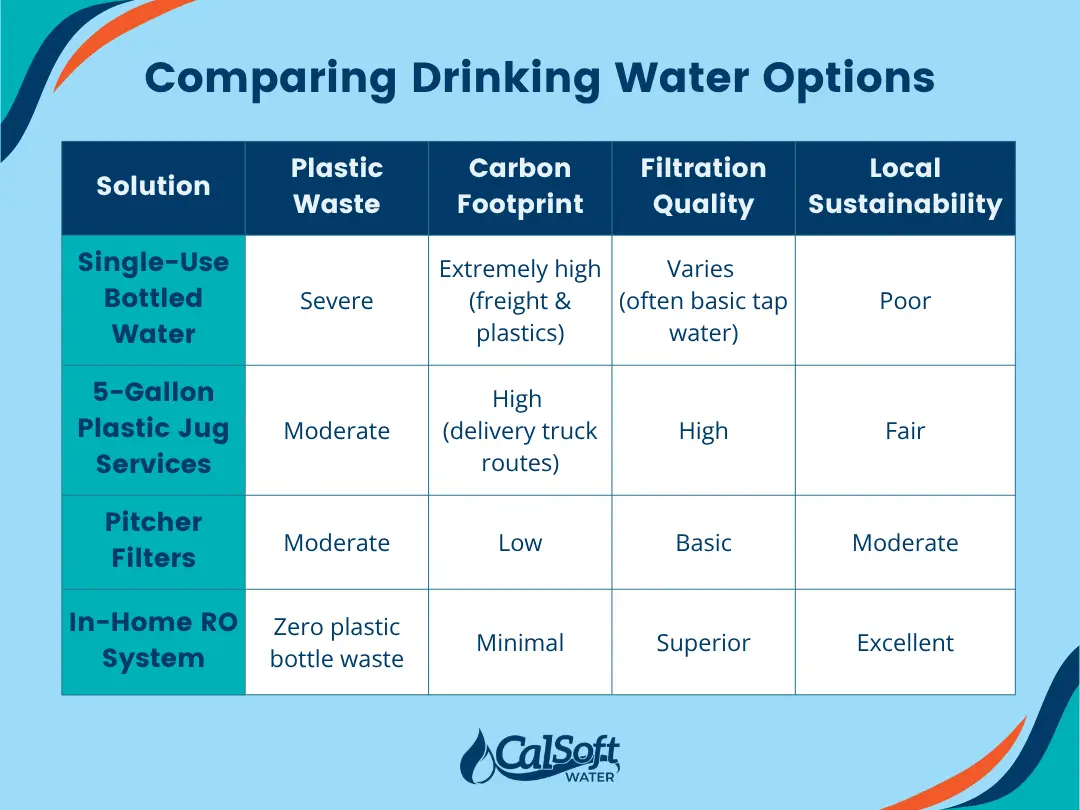
The primary eco-benefit of an in-home reverse osmosis unit is immediate source-reduction. Clean, ultra-filtered water flows directly from your dedicated kitchen tap. This eliminates the manufacturing energy, plastic packaging, and transport fuel associated with store-bought bottled water.
2. Microplastic and Contaminant Protection
Central Coast groundwater and municipal water supplies face unique localized challenges—ranging from hard mineral deposits to agricultural runoff and naturally occurring minerals. RO membranes filter out many contaminants, successfully trapping microplastics, heavy metals, nitrates, and chlorine before they ever reach your glass.
3. Understanding RO Water Ratios
It is true that traditional reverse osmosis systems use extra water to flush captured contaminants down the drain. However, modern high-efficiency RO systems drastically minimize this waste ratio compared to older models. Furthermore, when compared to the virtual water footprint required to produce a single plastic bottle (which takes up to 3 liters of water just to manufacture one bottle!), an in-home RO system remains significantly more water-efficient over its lifespan.
Environmental Benefits of RO vs Bottled Water and Other Drinking Water Options
Frequently Asked Questions About In-Home RO Systems
Is reverse osmosis water safe for daily drinking?
Yes. Reverse osmosis provides clean, refreshing drinking water by removing contaminants, bad tastes, and harmful impurities. Many homeowners complement their RO unit with an inline remineralization filter if they prefer added beneficial minerals like calcium and magnesium.
How much water does an in-home RO system actually use?
While older RO systems had higher recovery waste, modern high-efficiency systems optimize the filtration ratio significantly. Additionally, the water used to rinse the membrane is far less than the total water footprint required to manufacture single-use plastic bottles.
How often do RO filters need to be replaced?
Pre-filters and post-filters are typically changed every 6 to 12 months, while the main reverse osmosis membrane lasts between 2 to 3 years depending on household usage and local water hardness.
Upgrade to Clean, Eco-Friendly Water with an RO System from CalSoft Water
If you’re ready to protect the Central Coast while enjoying crisp, pristine drinking water right from your sink, CalSoft Water’s reverse osmosis systems offer the ultimate solution.
Designed specifically to tackle the unique water conditions of Paso Robles, Nipomo, Santa Maria, and surrounding communities, our systems provide:
- High-Efficiency Filtration: Advanced membrane technology that maximizes pure output while reducing drain rinse water.
- Multi-Stage Protection: Removal of nitrates, heavy metals, minerals, bad tastes, and odors.
- Turnkey Local Service: Professional installation and localized filter maintenance so your system operates at peak efficiency year-round.
Ready to make the eco-conscious choice for your family and our local coastline? Contact us today to start enjoying the health and environmental benefits of an RO system.