Living on California’s Central Coast, water conservation is almost second nature. We keep a close eye on reservoir levels, monitor municipal water updates, and try to make smart, eco-conscious choices around our homes. While 2026 has been a relatively mild year for drought conditions in California, any long-term resident knows that dry cycles are never far off. Preparing your home for water efficiency isn’t just something to think about during a drought crisis—it’s a smart habit that protects both the environment and your wallet year-round.
If you already have a water softener installed—or are thinking about getting one—a common question comes up: Does a water softener waste water?
The short answer? It depends entirely on the age and technology of your system.
Older, traditional water softeners can indeed be surprisingly wasteful. However, upgrading to a modern high efficiency water softener dramatically reduces water consumption while giving you all the benefits of soft, scale-free water.
Here is a breakdown of how older systems compare to modern technology, and why upgrading your water softener might be one of the easiest ways to conserve water at home.
The Root Cause: Why Do Water Softeners Use Water to Begin With?
To understand water waste, it helps to look at how softening works. Inside a water softener, mineral tank resin beads capture hard minerals like calcium and magnesium. Over time, those resin beads become full and can no longer trap minerals.
To keep softening your water, the system enters a cleaning cycle called regeneration. During regeneration, salty brine water flushes through the resin tank to wash away captured minerals and recharge the resin, sending the rinse water down the drain.
How often and how effectively a system regenerates determines whether it is a water saver or a water waster.
Older Soft Water Systems vs. Modern High Efficiency Water Softeners
The biggest difference between older units and newer technology comes down to timer-based vs. demand-initiated regeneration.

The Flaw of Older Timer-Based Softening Systems
Older softeners (often 10 to 15+ years old) operate on a simple mechanical clock. For instance, the timer might be set to regenerate every Tuesday and Friday night at 2:00 AM.
- The Problem: The system flushes the exact same amount of water regardless of how much water you actually used. If you were away on vacation for a week, an older system still ran its regeneration cycles, dumping over 100 gallons of clean water directly down the drain for no reason.
- Conversely, if you had guests staying over and used extra water, an old timer system might run out of soft water midway through the week, leading to hard water scale in your pipes until the scheduled timer kicked in.
How Modern High Efficiency Water Softeners Save Water
A modern high efficiency water softener uses smart digital controls and internal flow meters to measure your home’s exact water usage in real time.
- Demand-Initiated Regeneration: The system only regenerates when the resin bed is actually saturated. If you go on vacation, it simply waits until you return and start using water again.
- Proportional Brining and Upflow Rinsing: Modern units calculate exactly how much resin was used and apply only the precise amount of salt and water required to clean it. Upflow regeneration drives the brine through the resin bed from the bottom up, which cleans the beads far more thoroughly while using up to 45% less water and 50% less salt than older systems.
The Hidden Water Savings of Soft Water
While a water softener uses a small amount of water during regeneration, having soft water actually saves water across the rest of your household in ways that often go unnoticed:
- Faster Showering and Washing: Soft water lathers effortlessly with soaps and shampoos. You spend less time rinsing off soap film or scrubbing soap scum off shower glass.
- More Efficient Appliances: Hard water scale builds up inside water heaters, dishwashers, and washing machines, making them work harder and run longer. Soft water prevents scale, allowing your appliances to operate at peak manufacturer efficiency.
- Fewer Laundry Cycles: Because detergent works significantly better in soft water, clothes get clean on shorter cycles with cooler water, saving both energy and gallons per load.
Is It Time to Upgrade to a New, High Efficiency Water Softener?
If your current water softener is more than 10 years old, relies on a mechanical dial or timer, or seems to burn through bags of salt rapidly, it is likely using far more water than necessary.
Learn more: Top 5 Signs It’s Time to Replace Your Water Softener
Upgrading to a modern, high-efficiency automatic water softener allows you to:
- Lower your monthly utility bills by reducing unnecessary water and salt consumption.
- Protect your home’s plumbing and appliances from destructive Central Coast mineral buildup.
- Do your part for California water conservation by eliminating wasted regeneration water.
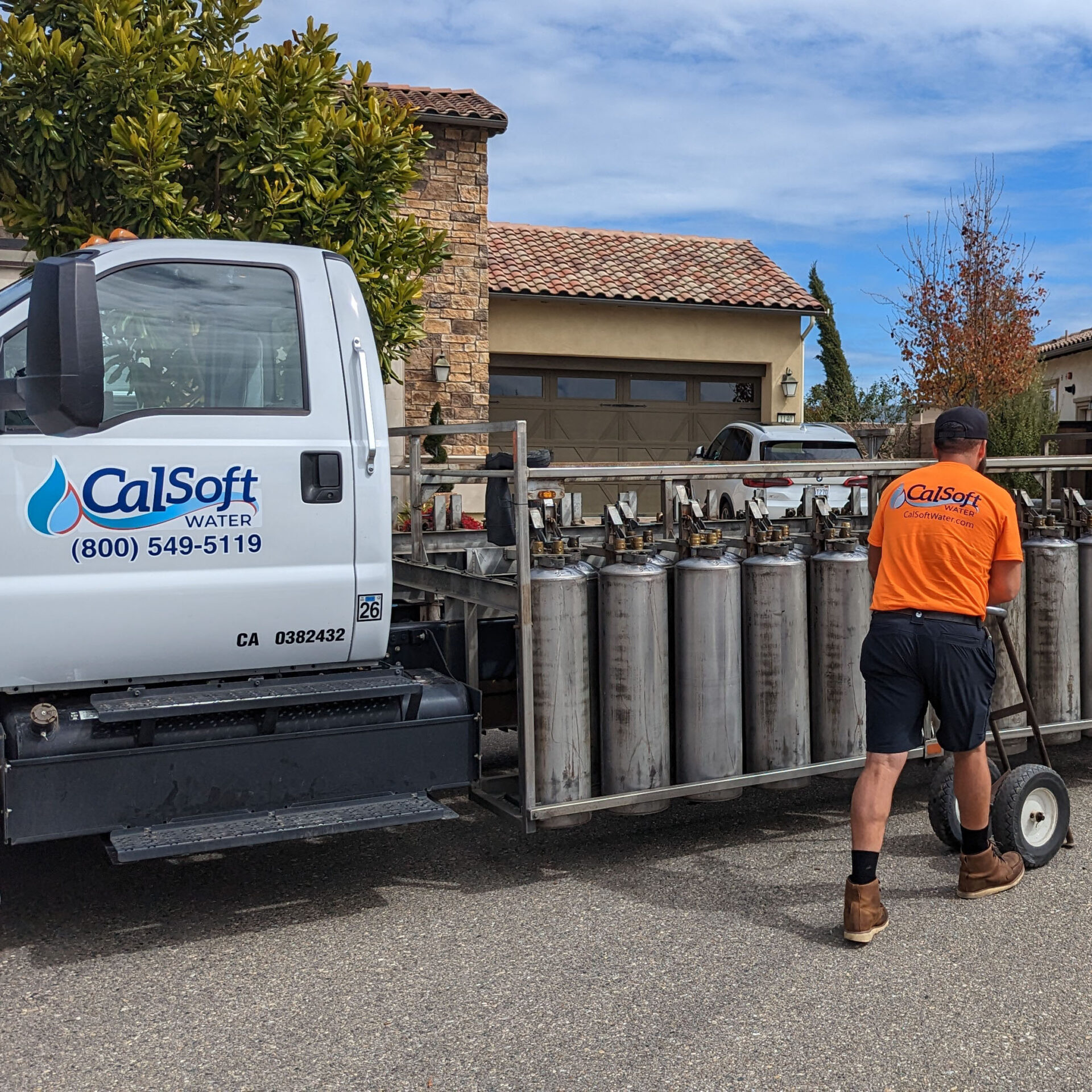
Want to know how efficient your home’s water system is? Contact us at CalSoft Water today to learn about our high efficiency automatic water softeners or our eco-friendly Portable Exchange Tank options!