
When we think of poor water quality, we often picture homes with private wells or rural properties far away from public utilities. If your water comes from a municipal treatment plant, you might assume that because it meets federal safety standards, it’s the best option for your home and family.
The truth is, municipal water treatment is designed to do one primary job: ensure your water is free of harmful bacteria and pathogens by the time it leaves the plant. However, what happens after that treatment—and what is left behind in the process—is a different story.
If you are living on California’s Central Coast, investing in a whole-house water filter isn’t just about making your drinking water taste better. (More on that here: How to Improve the Taste and Health of Your Drinking Water) It’s about protecting your home’s infrastructure, your appliances, and your family’s overall well-being. Here is why your city-supplied home needs a point-of-entry filtration system.
The Misconception of “Safe” City Water
Municipal water treatment plants do a fantastic job of keeping our water safe from biological threats. To do this, they rely heavily on disinfectants like chlorine and chloramines. While these chemicals are necessary to kill bacteria during the water’s journey through miles of underground pipes, they have served their purpose by the time that water reaches your tap.
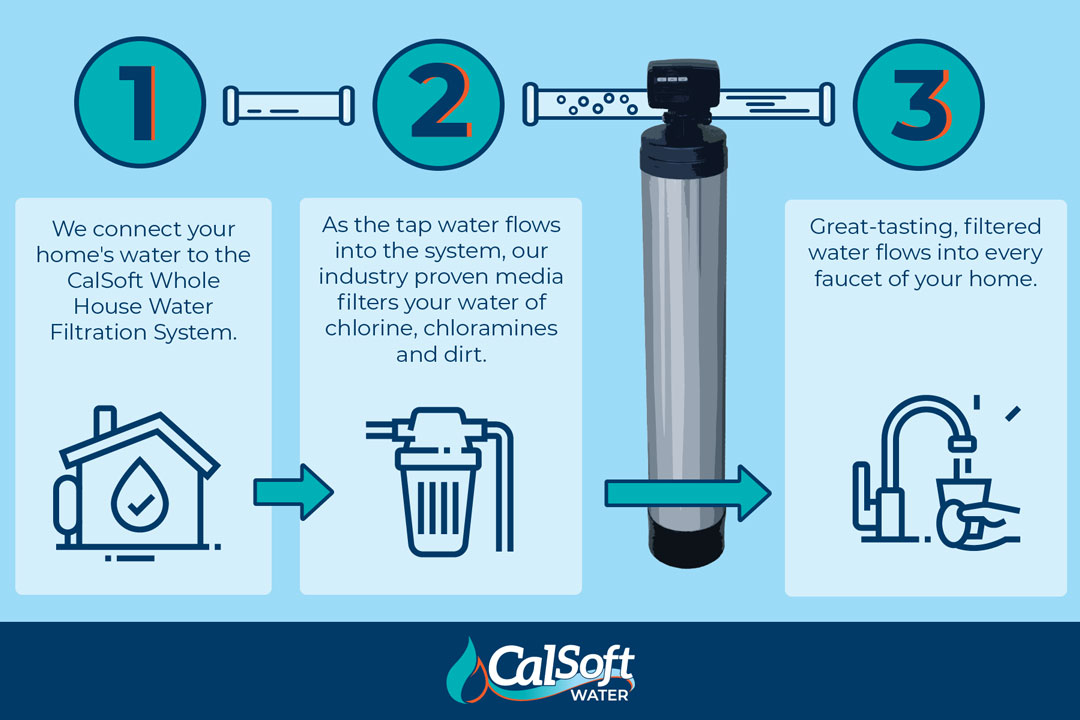
Leaving chlorine in your water means you are cooking with it, bathing in it, and breathing in its vapors. Furthermore, municipal systems cannot always catch every trace of microplastics, heavy metals, industrial runoff, or sediment that leaches into the water from aging city infrastructure. A whole-house water filter acts as your home’s personal security guard, catching these impurities at the point of entry.
Learn more: Decoding Municipal Water: What’s Really in Your Tap Water and How Do You Know It’s Safe to Drink?

Whole-House Water Filters vs. Point-of-Use Filters: What’s the Difference?
Many homeowners try to solve their water quality issues with a point-of-use system, such as a refrigerator filter or a countertop pitcher. While these are great for improving the taste of your morning coffee, their scope is incredibly limited.
- Point-of-Use (Pitchers, Fridge Filters, Reverse Osmosis Systems): These treat only the water from a specific faucet. They handle a fraction of a gallon at a time and don’t treat the water you use to shower, wash clothes, or run the dishwasher.
- Point-of-Entry (Whole-House Water Filtration System): This system is installed at the point where your main water line enters your home. Every single drop of water that flows through your pipes—whether it’s going to your master shower, your garden hose, or your kitchen sink—is thoroughly filtered.
Benefits of Whole House Water Filters For Your Home, Budget, and Health
Protecting Your Home’s Infrastructure and Your Wallet
Unfiltered city water can be incredibly harsh on your home’s infrastructure. Residual chemicals and underlying sediment act as abrasive agents inside your plumbing. Over time, this can cause:
- Appliance Degradation: Dishwashers, washing machines, and ice makers have small, delicate components that easily clog or corrode when exposed to harsh chemicals and sediment.
- Water Heater Strain: Unfiltered water accelerates sediment buildup at the bottom of your water heater, forcing it to work harder, consume more energy, and ultimately fail years before its time.
By installing a whole-house filtration system, you extend the lifespan of your expensive appliances and protect your plumbing, saving thousands of dollars in premature replacement and repair costs.
Lifestyle Benefits: Health and Beauty
The benefits of whole-house water filters extend far beyond the kitchen. Have you ever noticed that your skin feels tight and dry after a shower, or that your hair feels brittle despite using high-end conditioners?
When you shower in chlorinated water, the heat turns the chemical into a vapor, which you then inhale. Simultaneously, the chlorine strips away the natural oils from your skin and hair, exacerbating conditions like eczema and dandruff.
A whole-house water filter removes these harsh disinfectants before they hit your showerhead. The result? Softer skin, shinier hair, and a truly clean, spa-like shower experience.
The Perfect Match: A Whole-House Water Filter Plus Water Softener
It is important to note that a whole-house water filter and a water softener perform two entirely different yet highly complementary jobs. A water softener removes hardness minerals (like calcium and magnesium) to prevent scale buildup, while a whole-house filter removes chemical contaminants, unpleasant tastes, and odors.
When integrated together, a whole-house water filter works hand in hand with your water softener. The filter protects the softening resin from chlorine damage, ensuring your entire water treatment system runs efficiently for years to come.
Ready for Total Peace of Mind?
Your home is likely your biggest investment, and your family’s health is your top priority. Relying on basic city water treatment means you’re missing out on the true comfort, savings, and cleanliness that premium water provides.
If you are ready to experience the difference that a whole-house water filtration system can make in your California home, we are here to help. Whether you are in Santa Maria, San Luis Obispo, Paso Robles, or the surrounding areas, contact us today for a comprehensive water test, and let us design the perfect filtration setup for your household.