
If you’ve heard various myths about reverse osmosis, you’re not alone. Reverse osmosis (RO) drinking water systems are one of the most effective ways to improve water quality at home, but they’re also surrounded by confusion and outdated information.
For environmentally-conscious homeowners in California, especially in areas like Santa Maria and Paso Robles, understanding what’s fact vs. fiction can help you make a smarter, more sustainable decision about your drinking water.
Here, we’ll break down the most common myths about reverse osmosis systems and uncover the truth.
What Is a Reverse Osmosis Drinking Water System?
A reverse osmosis system uses a semi-permeable membrane to remove contaminants from water at the molecular level. This process can eliminate up to 99% of impurities, including heavy metals, chemicals, bacteria, and more.
That means cleaner, safer, better-tasting drinking water—right from your tap.
Learn more: Common Contaminants Removed by Reverse Osmosis: What You Need to Know
Common Myths About Reverse Osmosis (and the Truth)
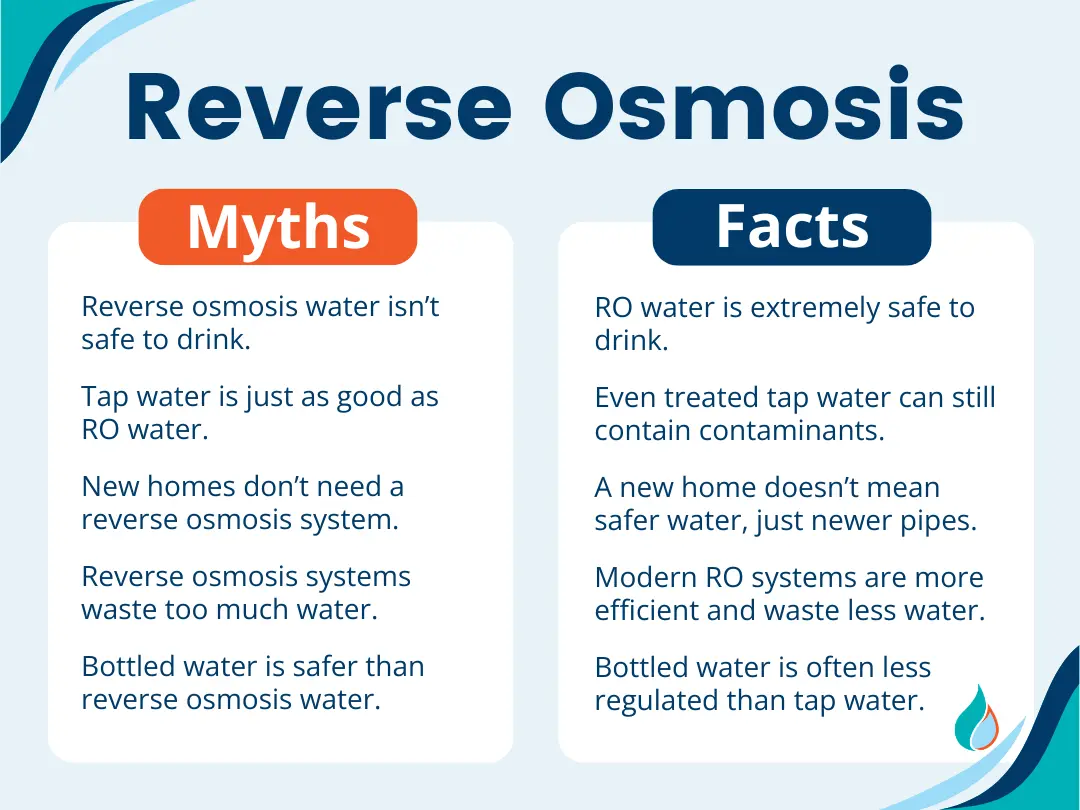
Myth #1: “Reverse osmosis water isn’t safe to drink.”
This is one of the most persistent myths about reverse osmosis, and it’s simply not true.
The truth:
RO water is considered extremely safe and is widely used around the world for drinking water purification.
While reverse osmosis removes some naturally occurring minerals, the vast majority of essential nutrients come from food, not water.
Many modern systems also include remineralization filters to restore beneficial minerals for taste and balance.
Myth #2: “Tap water is just as good as RO water.”
The truth:
Municipal water treatment does a good job, but it doesn’t remove everything that could be harmful to your health.
Tap water can still contain:
- Chlorine and chloramines
- Lead or other heavy metals
- PFAS (“forever chemicals”)
- Microplastics
Reverse osmosis systems go a step further by filtering out dissolved contaminants that standard water treatment may leave behind.
Myth #3: “New homes don’t need a reverse osmosis system.”
Many homeowners assume that because their home is new, their water is automatically clean.
The truth:
Even in newer homes, your water still comes from the same municipal or groundwater sources—which may contain contaminants.
In many regions of California, water quality concerns can include:
- Agricultural runoff (nitrates)
- Hard water minerals
- Aging infrastructure upstream
A new home doesn’t guarantee clean drinking water—it just means newer pipes. So, even if you’ve just recently purchased a new build, like those at Nevina™ (a Trilogy® Boutique Community™ in Paso Robles), installing a reverse osmosis drinking water system is in your best interest.
Myth #4: “RO systems remove all minerals and RO water is unhealthy to drink.”
The truth:
RO systems do reduce mineral content, but this is not harmful for most people. That’s because:
- Water contributes very little to your daily mineral intake.
- Foods like vegetables, dairy, and grains provide far more nutrients.
- Some RO systems add minerals back for taste.
In fact, RO water often improves taste by removing unwanted substances like chlorine and sulfur.
Myth #5: “Reverse osmosis systems waste too much water.”
This myth about reverse osmosis has some truth—but it’s outdated.
The truth:
Older RO systems did waste more water, but modern systems are far more efficient. While some wastewater is still produced, the environmental trade-off is often far better than relying on bottled water, which creates plastic waste and pollution.
Myth #6: “Bottled water is safer than reverse osmosis water.”
The truth:
Bottled water is not necessarily safer, and in some cases, it’s less regulated.
- Tap water is regulated by the EPA.
- Bottled water is regulated by the FDA with less oversight.
- Bottled water may contain microplastics.
Reverse osmosis systems provide on-demand purified water without plastic waste, making them a more sustainable choice.
Learn more: The Environmental Impact of RO Systems vs. Bottled Water: What’s the Sustainable Choice?
Myth #7: “Reverse osmosis is only necessary if you have bad water.”
The truth:
Even “good” water can contain trace contaminants that affect:
- Taste
- Odor
- Long-term health
RO systems are about optimizing water quality, not just fixing obviously bad water.
Why Reverse Osmosis Makes Sense for California Homes
California homeowners face unique water challenges, especially in Central Coast communities like Santa Maria and Paso Robles.
1. Protection Against Regional Water Contaminants
Groundwater and agricultural areas can introduce:
- Nitrates
- Pesticides
- Dissolved solids
RO systems are highly effective at removing these contaminants.
2. Better Water Taste and Drinking Experience
Hard water and chlorine can impact your water’s flavor. RO water is:
- Cleaner
- Odor-free
- Better for cooking and water-based beverages like coffee and tea
3. A More Sustainable Alternative to Bottled Water
If you’re environmentally conscious, this is a big one.
Switching to an RO system helps:
- Reduce plastic waste
- Lower your carbon footprint
- Eliminate the need for single-use bottles
4. Long-Term Cost Savings
While there’s an upfront investment, RO systems can:
- Save money long-term compared to bottled water
- Reduce wear on appliances (when paired with other filtration systems like water softeners)
5. Peace of Mind
With increasing concerns about:
- PFAS
- Lead
- Microplastics
RO systems provide confidence that the water you’re drinking every day is safe and clean.
Choosing the Right Reverse Osmosis System
Not all RO systems are created equal. The best drinking water systems offer:
- Multi-stage filtration
- High efficiency (low wastewater)
- Professional installation and support
That’s where working with a trusted local provider matters.
Get Cleaner, Safer Water with CalSoft Water
The truth about reverse osmosis is simple:
It’s one of the most effective, reliable, and environmentally responsible ways to improve your drinking water.
Ready to move past the myths about reverse osmosis and experience the real benefits? It’s worth exploring a professionally installed system.
At CalSoft Water, we help California homeowners find the right water treatment solutions for their specific needs. Then, you can enjoy clean, safe, and sustainable drinking water at home.
Don’t let outdated myths about reverse osmosis hold you back from getting the quality drinking water you deserve. Whether you’re in Santa Maria, Paso Robles, or anywhere in California, an RO system can help you take control of your water quality—and your health. Contact us today to learn more and start enjoying better water that’s better for you!